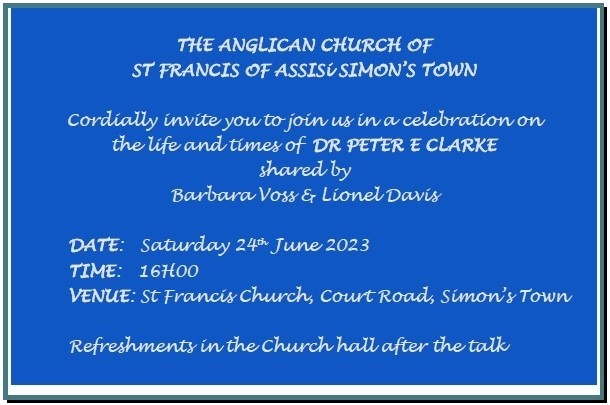
I was recently invited to a celebration of the life and times of Dr Peter Clarke, internationally renowned South African artist who came from Simon’s Town. The presentation was a conversation between Barbara Voss and Lionel Davis, close friend of the artist. Barbara Voss with Bridget Thompson are working on a publication on the art of the great man who grew up in Simon’s Town.
When I was a parish priest working in Simon Town I had the good fortune to meet Peter Clarke and to hear him read some of his poems published in Plain Furniture in 1991, to a group of young people in St Francis Church. I was also involved in raising money for the Peter Clarke stained glass windows for the church For St Francis Church. The latter is a long story – an agony and an ecstasy. In the next blog I shall present images of the windows.
Mary Kindo who helped to arrange the celebration in St Francis Church, asked me to read a few of Peter’s poems. So, I chose three of his poems, two of them which he had read when I was present and which I like. I present these to you in this blog and some of the master’s works sent to me by Mary Kindo.
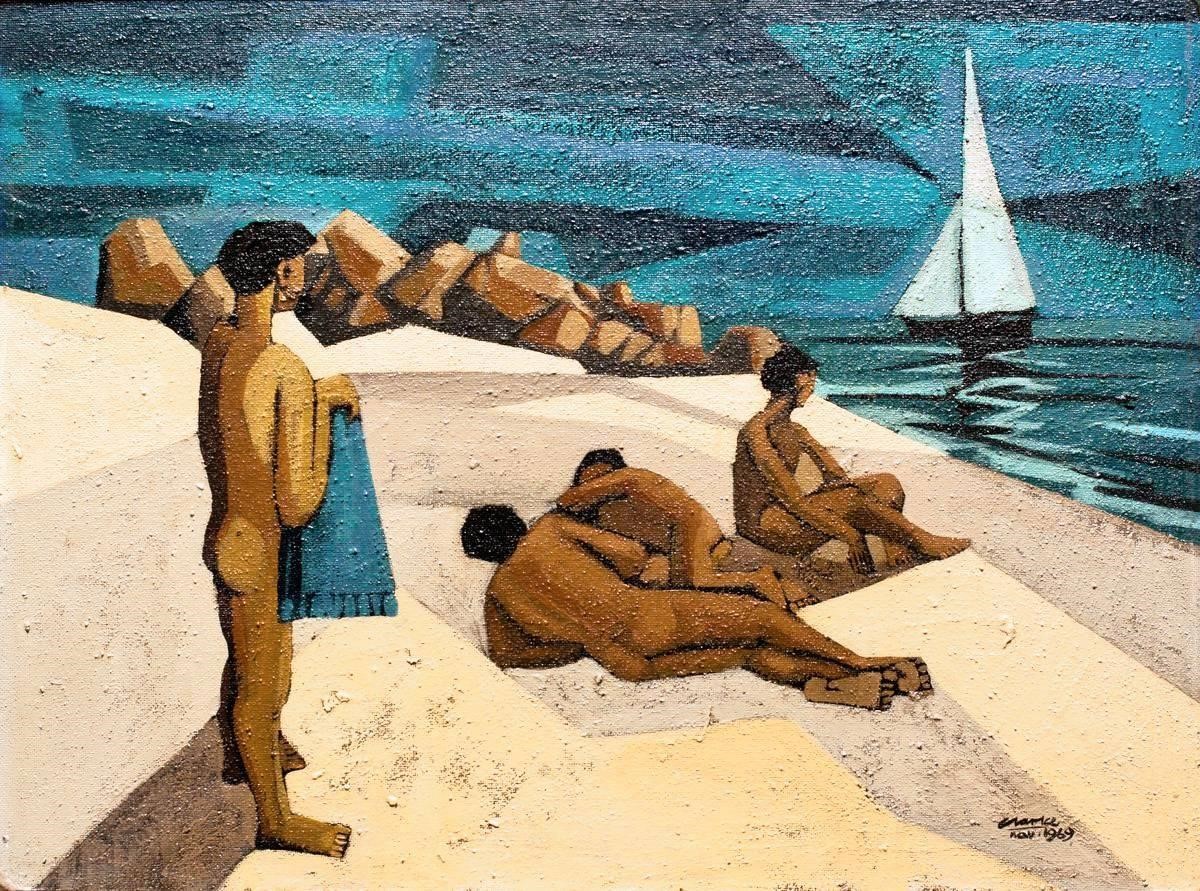
The painting above is one of my favourites. It was painted during the apartheid era. Sandy Bay is a nudist beach on the Atlantic seaboard of the Cape Peninsula of Cape Town,South Africa. These bathers were probably breaking the law by simply being there.
Registering for School 1936
That first day
he watched
his mother and teacher-to-be
put together necessary information.
He stood waiting
listening to the way
his particulars were given
as if, even though there,
he were elsewhere or dead or dumb.
When they were done
he asked his mother, “Can we go home now?”
“No,” she said gently,
“You have to stay.”
She didn’t let him know
learning is a lifelong process
and on this journey
you’ve a long way to go
alone.
Peter Clarke had a very short career at school. The poet is remembering the first day at school when his mother left him there. Something he was not expecting. He was certainly not expecting to return again and again.
The first day at school is something most of us remember very clearly. For some it was a gladsome day, for others, myself included it was traumatic day.
I chose Beachcombing in which the poet talks about himself in the third person.
He is observing himself on the beach, searching for things that have been washed up by the waves, noticing the jetsam, the colours, the beauty, deciding how these processed and discarded things could be in an art- work, could become art.
In this poem we enter the mind of the artist at work.
In Peter’s later years he took great delight in creating collages, even books of artistic creations.
These often became gifts for his friends.
Beachcombing
Strolling on the littered beach
his was the eye that would search
for retrievable things,
above the tidal reach,
appealing to curiosity, childish ideas and taste.
Collecting, flotsam on the way,
thinking aloud, occasionally he’d say to us,
“I’ll take this and this. . . and that. . .”
He’d pick up driftwood to carve
or knock together.
Often he’d find a need for every piece,
fishbone, feather, plant and weed.
“It needn’t go to waste.”
He’d pick up bits of metal and later
flatten folds and creases
then cut and purposefully
put together different pieces
with carefully placed nails
and lengths of measured wire and wood.
So inventive,
able to improvise easily
he received his buddies’ admiration.
It was good to see
the ingenious way his mind functioned
and the slender hands give shape
to things.
Had later times been right,
would that he had tried
to reach the sky.
Mr Ramjee, shoe repairer: Simon’s Town
This familiarity,
fondness, love,
the way he cups the shoe
lodged in his embrace.
This is his life.
He adds and pares leather away
around the edge
carefully
with the razor-sharpness of his knife
to a purity of shape.
His is a slender muscled
involvement in his calling,
sleek hair combed back,
sometimes a thin forelock easily falling
on glasses lodged comfortably
on his nose,
his work trousers black
and shiny smooth beneath the labouring of years
and the stenches of assorted shoes
on the aproned-covering of his knees.
Somehow he is the central point between travelling
that cannot cease.
The individual character of the owner is retained
within the inner shaping of this footwear
year by year.
He cuts and glues and patches
and stitches with rosined twine
until the damaged areas disappear
and then the finished almost brand new shoes
are placed upon the shelf
to wait.
How strange the past,
the continuity of this elusive line,
an odyssey started
in some village in the sub-continent
where his anonymous Indian ancestors
patiently plied their trade
and lived and died,
never to know
the distances traversed,
or where unknown descendants of their caste,
daring, eager, unafraid,
would also go
or where this particular
Ramjee-shoe-repairer went.
Many of you will remember the shoemaker of old who occupied a garage or little shop in the suburbs of Cape Town. The person who kept one in shoes by making them last and last.
I remember short curly haired Mr.Leggat with spectacles on the edge of his nose and gravelly voice, who told Bible stories while he worked.
Shoes are about journeys -they accompany us on our way.
The poet wonders about the journey Mr Ramjee had made to be where he was, and indeed his ancestors would be surprised to discover that one of their descendants would have travelled so far to find a home.
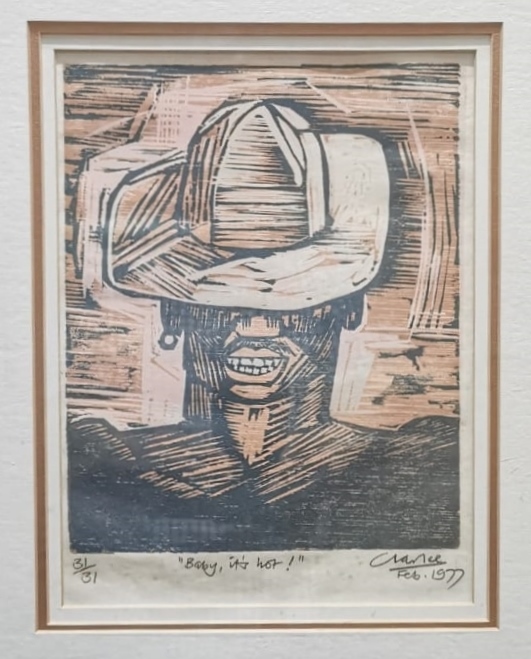
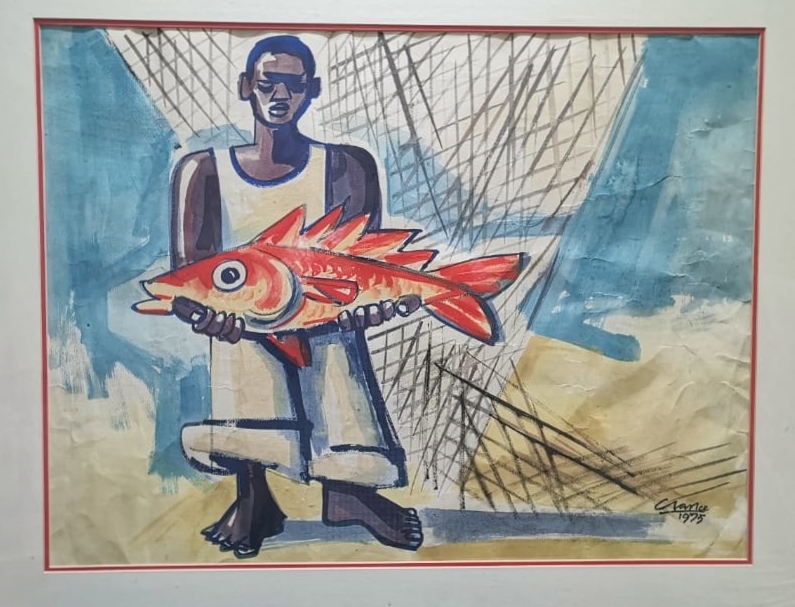
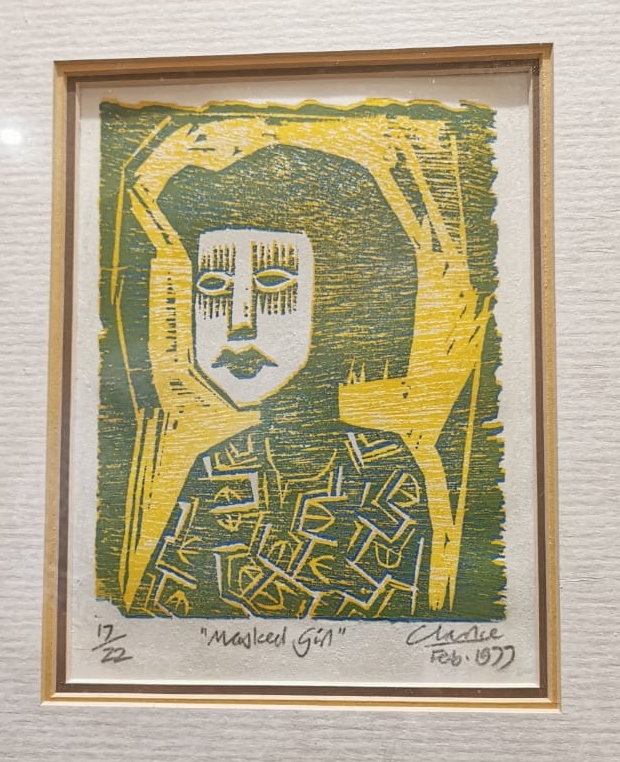
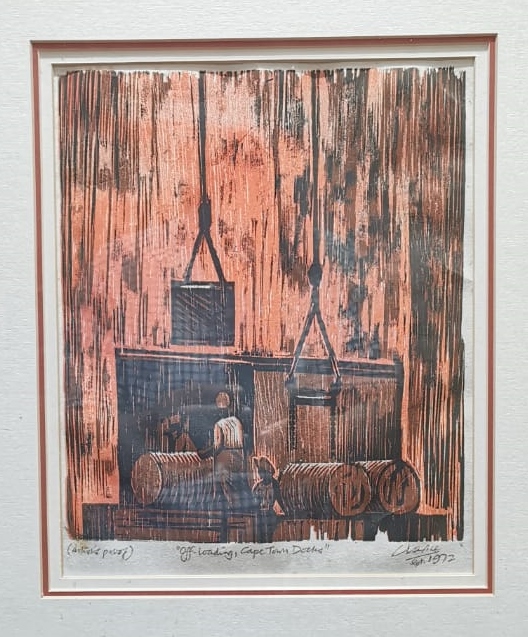
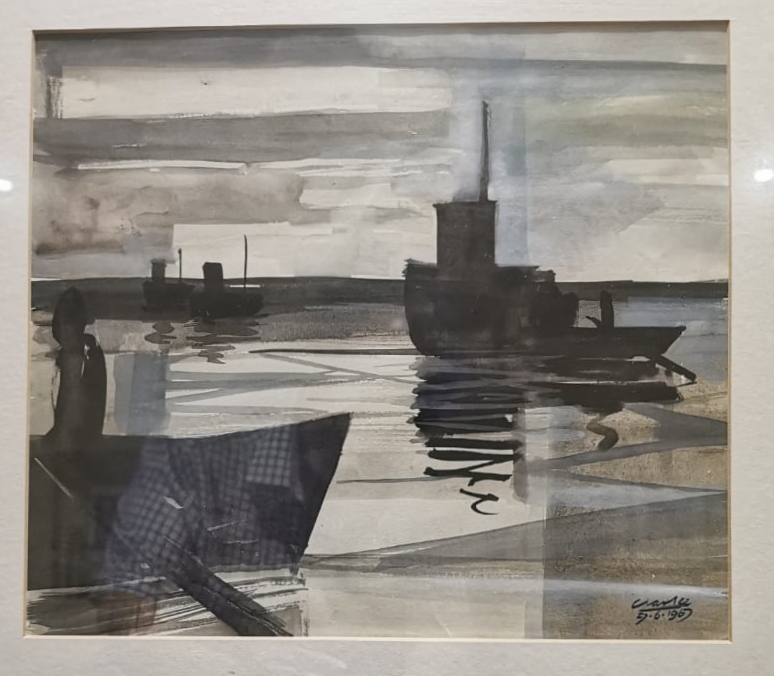

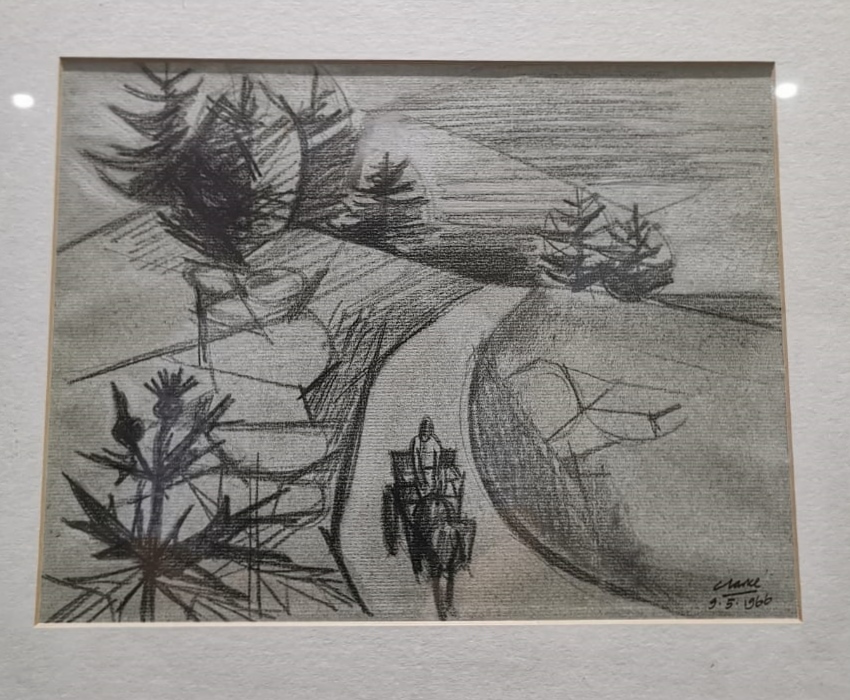

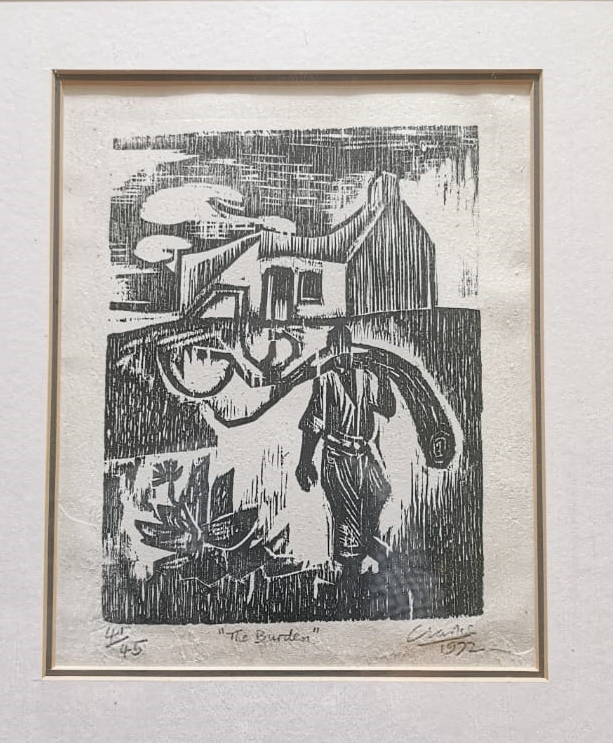
The images above have been supplied with thanks from Mrs Mary Kindo of Simons Town
 bobcommin.com
Thank you. I’m so glad they are putting a book together.
LikeLike
Thank you Bob. These poems are lovely – my favourite one is the one about the Ramjee – Shoerepairer – and I love the images of Peter Clarke’s paintings.
I am so grateful to receive new entries on your blog – they are gems for the soul!
Keep warm and well
Sue
LikeLike
Hi Bob I love the poems that you read it take me many years back as a child I was introduced too poetry and how I loved it I also wrote a few myself for my self
LikeLike